Shopping note: This journal carries advertisements and may earn a commission from qualifying purchases through marked commercial links. Product availability, prices and returns depend on your retailer and region. Read our disclosure.
In this story
Build the seated outfit firstMake the outer layer easy to manageChoose shoes for platforms and pavementsGive essential items a fixed locationPack around the arrival planBuy only for an identified friction pointA train journey can involve a chilly carriage, a warm platform, a staircase without a lift and dinner shortly after arrival. Dressing for the day means allowing for each of those moments. Start with the journey’s demands rather than the destination photograph. The clothes should remain comfortable while seated and make it easy to manage your own bag, find your ticket and settle into the next part of the day.
Build the seated outfit first
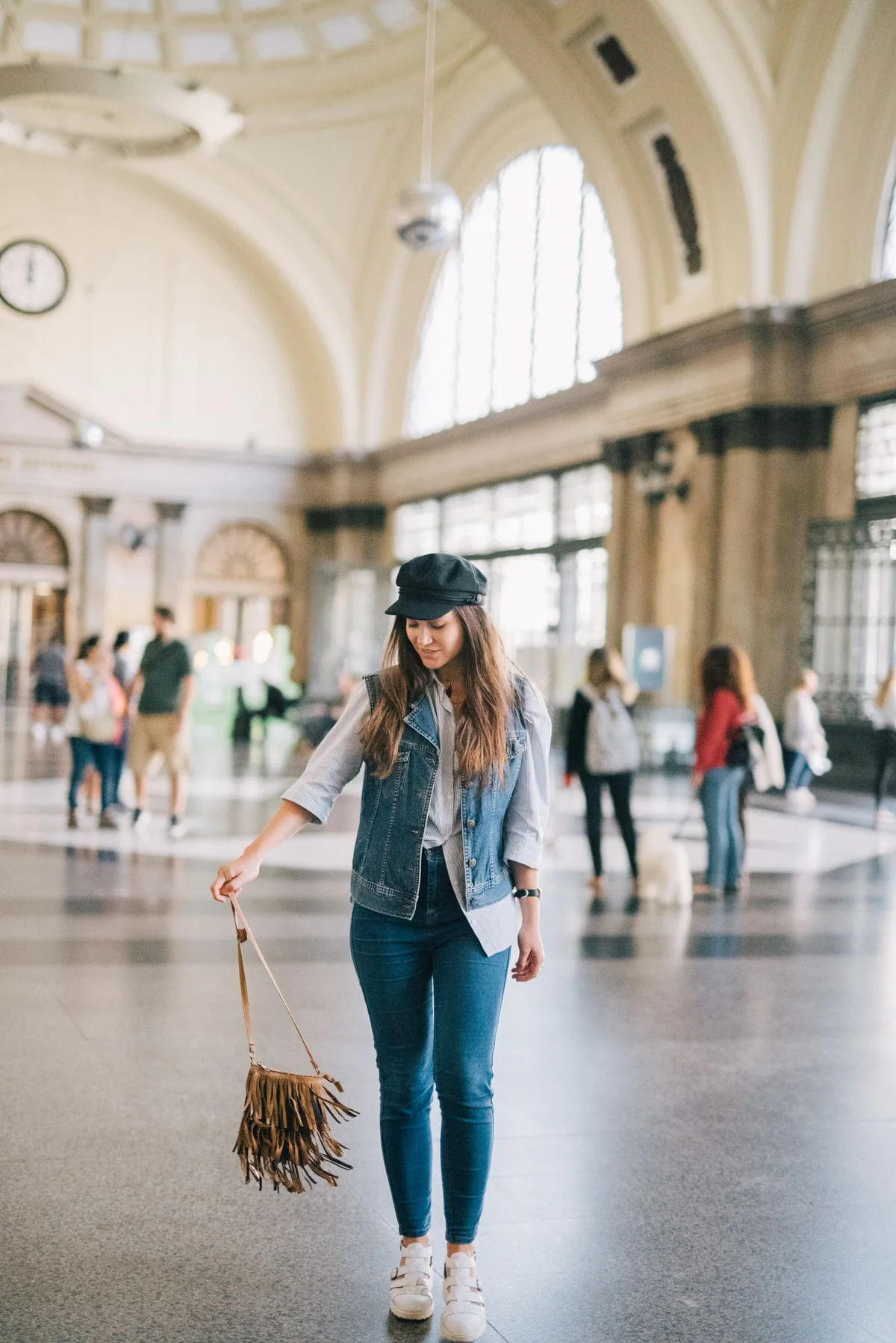
Choose trousers, jeans or a skirt that feels comfortable across the waist when you sit normally. Test the outfit for several minutes at home rather than simply bending once in front of a mirror. A waistband that feels fine standing up may become distracting during a longer journey. Pockets should remain accessible without pressing their contents into your hips.
A soft top with a separate layer gives more flexibility than one heavy garment. For example, a cotton shirt over a simple tee can be opened on a warm platform and closed in a cool carriage. A lightweight knit is another option if its care requirements suit the trip. Avoid assuming any material will regulate temperature perfectly; personal comfort and the actual weather still matter.
Make the outer layer easy to manage
A jacket should come off without unpacking the entire seat area. Think about where it will go: across your lap, folded into luggage or over your arm during a transfer. A very bulky coat may be necessary in cold weather, but it changes how much other luggage you can manage comfortably.
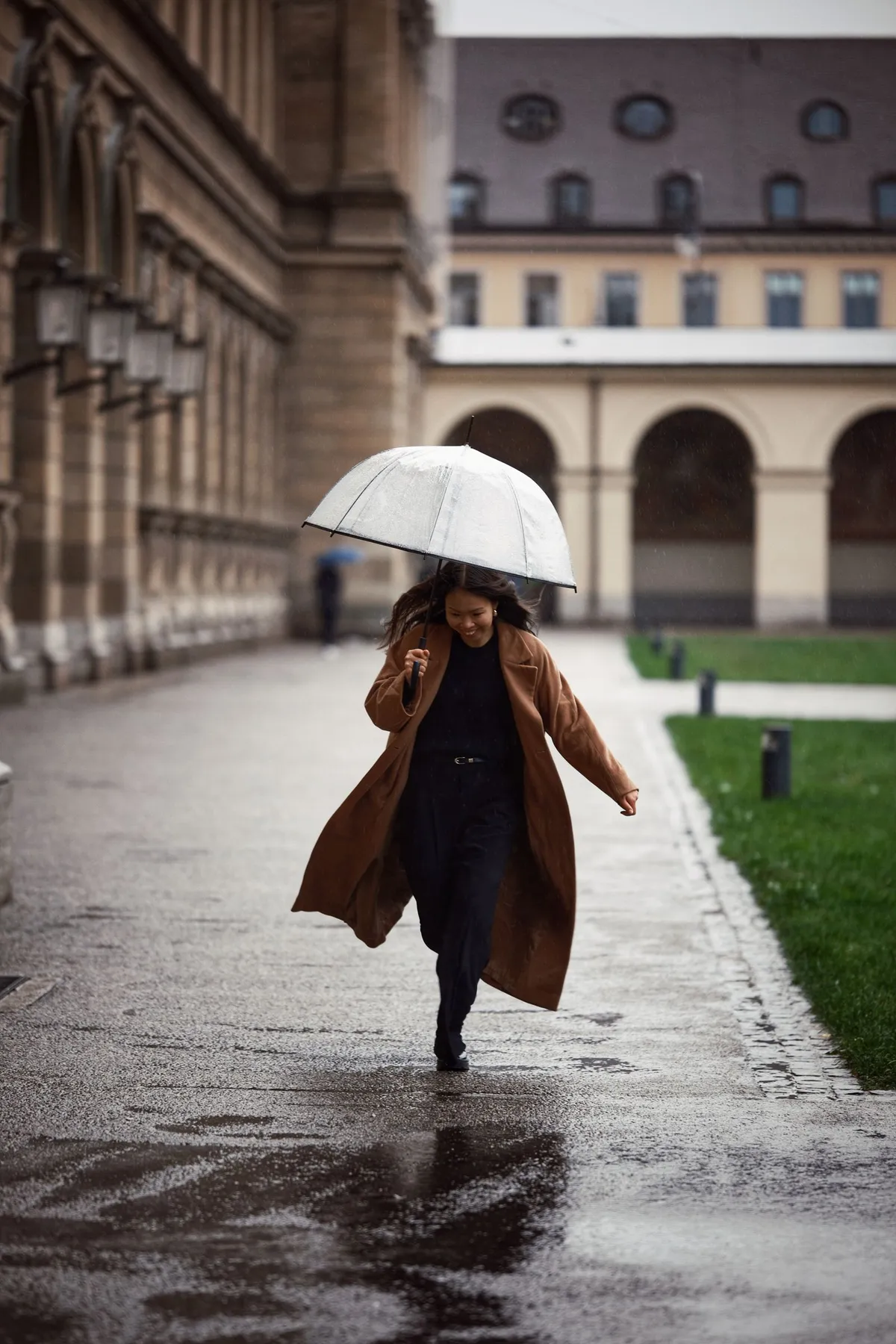
Keep rain protection in the plan when the forecast calls for it. A compact umbrella can be useful at arrival, provided it is accessible rather than buried under clothes. If your destination has a wet weekend ahead, adapt the capsule in what to wear for a rainy city weekend to the specific forecast and your planned walking distance.
Choose shoes for platforms and pavements
Wear a familiar pair suited to carrying luggage and standing. This is a poor moment to test stiff new shoes. Consider grip, secure fastening and whether the shoe stays comfortable when you climb steps. Slip-on convenience is useful only if the fit remains stable.
If dinner calls for a different pair, decide whether changing shoes is worth the luggage space. Often a tidy sneaker or a comfortable loafer can suit an informal restaurant, but check the venue’s stated dress expectations. Do not pack a second pair for a hypothetical occasion that is absent from the itinerary.
Give essential items a fixed location
Keep your ticket, identification when required, payment method and phone in a consistent secure pocket or zipped compartment. Check the railway operator’s current travel requirements directly, especially for cross-border journeys. Store a copy of important booking details in a way you can access if mobile reception is poor.
A small pouch can organize charging cables, while another can hold personal essentials. Avoid multiplying pouches until each tiny object needs its own container. The aim is to find what you need from your seat without laying everything on the table. The personal-item packing list offers a more detailed approach to this accessible bag.
Pack around the arrival plan
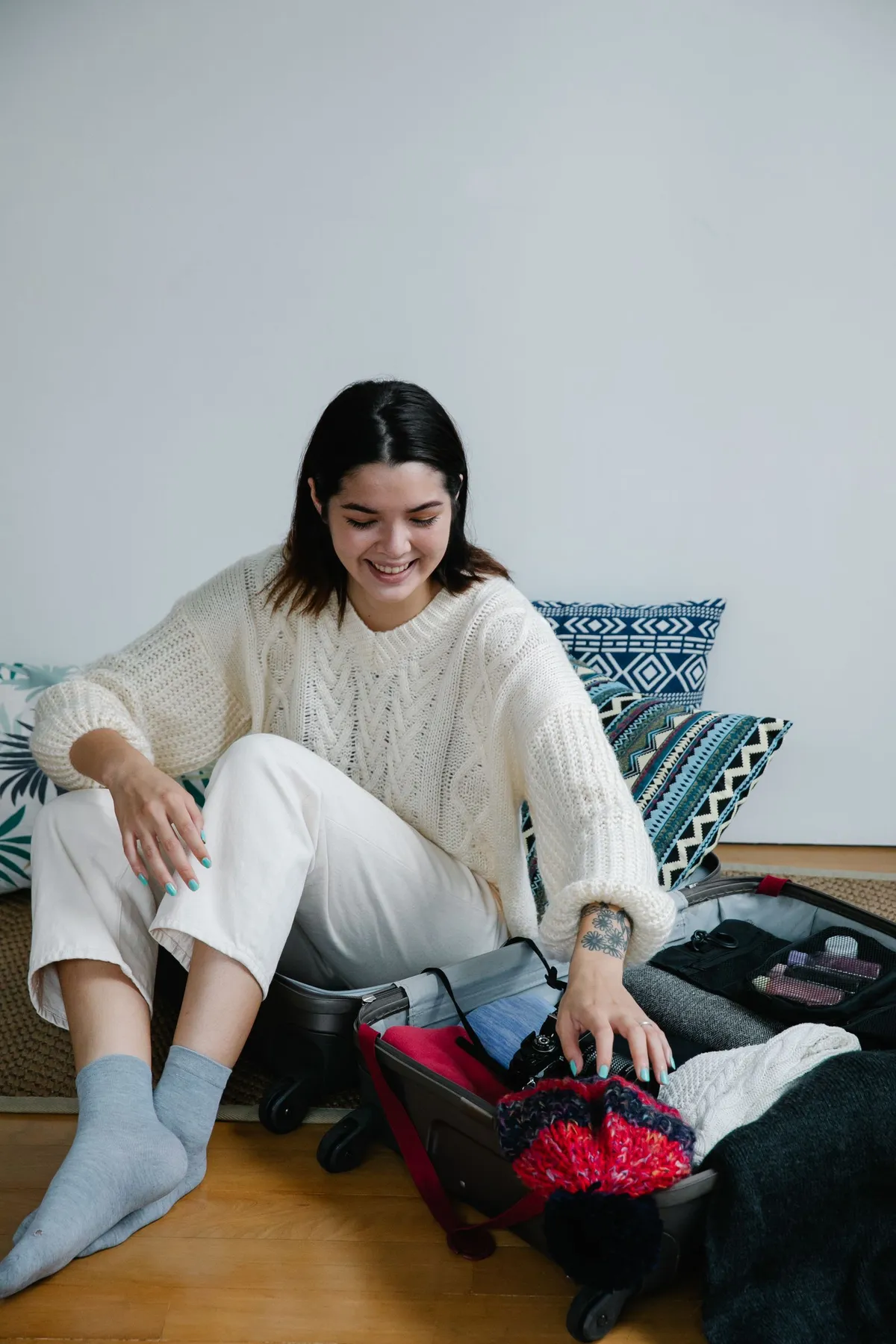
If you can leave luggage before dinner, put any change of clothes where it is easy to reach. If you cannot, choose an outfit you are comfortable wearing through arrival and the meal. A scarf, different earrings or a neater top can adjust the feeling without requiring a complete second outfit.
Check your accommodation’s actual check-in arrangements rather than assuming luggage storage exists. That detail affects both the outfit and the bag. A compact bag you can comfortably carry through a neighborhood may matter more than fitting one additional dinner option.
Buy only for an identified friction point
A travel outfit does not require a dedicated shopping category. Try sitting, lifting your packed bag and putting on the outer layer with clothes you already own. If something fails, name the problem clearly before looking for a replacement. You might need trousers with a different waistband, a bag with a secure closure or a lighter layer. Compare dimensions, composition and care instructions before ordering. The strongest travel purchase solves a repeated inconvenience across several journeys, then continues working during ordinary weeks at home.
Have a correction or a question? Contact the journal. See how we choose topics and approach shopping advice.