Shopping note: This journal carries advertisements and may earn a commission from qualifying purchases through marked commercial links. Product availability, prices and returns depend on your retailer and region. Read our disclosure.
In this story
Understand the silhouetteCheck opacity in useful lightRead beyond the word cottonA fitting-room checklistWhere to direct a shopping searchA white cotton shirt can look wonderfully simple until the first real day in it. The front pulls when you reach for a bag, the hem escapes a waistband, or the fabric looks much more transparent beside an office window. A useful buying decision begins with those ordinary movements, not a perfectly arranged product photograph.
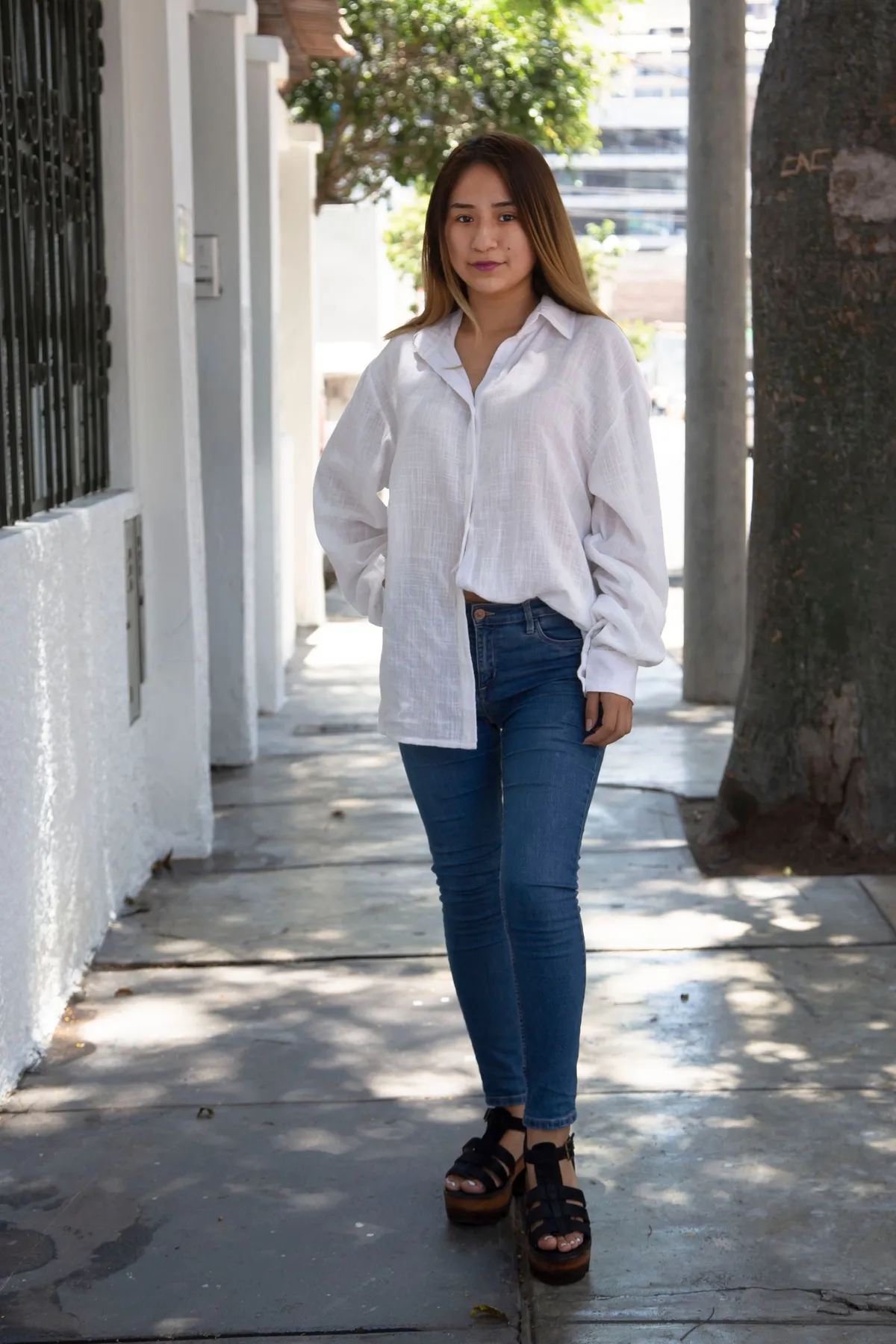
Decide how the shirt will be worn most often. Tucked into trousers, open over a tank and loose over jeans are three different jobs. One shirt may cover all three, but that should be checked rather than assumed. Bring or wear the bottom and underlayer you expect to use when trying it on.
Understand the silhouette
A shoulder seam near the shoulder edge usually creates a more defined shape. A dropped seam creates a more relaxed line, but it should look intentional rather than restrict movement elsewhere. Raise your arms, reach forward and sit down. Check the back and upper arm as carefully as the front.
Look for pulling between buttons while standing naturally. A larger size may help, though it can also add unwanted length or sleeve volume. A different cut may solve the problem more effectively. Bust darts, back pleats and a straighter or more curved body all change how a shirt accommodates movement.
For a tuck, test the hem with the actual waistband. Very short shirts may pull free when seated; long shirttails may create excess bulk in slim trousers. A partial tuck is an option if you like the appearance, but it should not be a workaround for a shirt that feels uncomfortable throughout the day.
Check opacity in useful light
Hold the fabric against a contrasting layer and look at it in daylight where possible. Then try it with the undergarment or tank you would actually wear. Opacity changes with fabric thickness, weave, color and fit. A tightly stretched area can reveal more than a loose section of the same shirt.
Sheerness is not automatically a fault. A light shirt may be exactly right as an open summer layer. It is less useful if the intended purpose is an uncomplicated work top with nothing beneath it. Include the cost and comfort of an additional layer when comparing options.
Read beyond the word cotton
Check the complete fiber composition and care instructions. A cotton blend may behave differently from a pure cotton fabric, and the label alone does not tell you whether you will enjoy the feel. Touch the cloth, examine the seams and assess its weight. Crisp poplin and softer textured weaves create different silhouettes even in similar cuts.
Ask yourself whether ironing is realistic. Some wrinkles may suit a relaxed outfit, while a formal collar and cuffs may need more attention to achieve the appearance you want. The Sunday reset routine can help make that care part of a manageable schedule rather than an unexpected chore.
A fitting-room checklist
- Button the shirt fully and check the placket while seated.
- Reach forward as though lifting a shopping bag.
- Bend both elbows and assess the cuffs and upper sleeves.
- Try the collar open and closed if both matter to you.
- Test a full tuck, an untucked hem and any intended layering.
- Inspect loose threads, button attachment and seam puckering.
Take a photograph from the side as well as the front. A back hem that catches on the body or an overly deep armhole can be easier to see that way. Keep tags attached during any permitted home assessment, and follow the retailer’s return requirements.
Where to direct a shopping search
Search for the function you need: a straight cotton shirt, a curved-hem work shirt or a relaxed overshirt. Retailers such as Gap, Uniqlo and department stores offer places to compare; individual stock, sizing and composition require checking. Resale can also be useful when garment measurements are provided. Ask for chest width, length and sleeve measurements rather than relying entirely on the labeled size.
A versatile shirt should connect with at least three combinations already available in your closet. Try it beside dark trousers, your regular jeans and one colored layer from the fall outfit guide. If it only works with several new purchases, pause. The most valuable white shirt is the one that makes getting dressed easier with what you already own.
Have a correction or a question? Contact the journal. See how we choose topics and approach shopping advice.